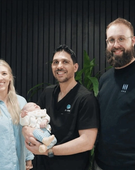

Your journey with us.

Your preconception health is just as important as your pregnancy, birth and beyond.

As a team we will work together to get you to your best preconception health.
Having a baby is one of the most significant and rewarding events in your life and it’s important you feel supported. My team including my midwife and I will work together with you, to optimise your health during your preconception period.


Preconception check-up
At the preconception check-up Dr Joseph Sgroi will ask a variety of preconception health-related questions.
During the screening process, we will run through various health checks.
Clinical assessment
This involves testing your blood pressure, body mass index (BMI), breast examination and cervical screening.
Medical and family history
During this time, we will run through your family and personal medical history. We will gain an understanding of any pre-existing medical conditions and do a thorough assessment of your mental health. This enables me to optimise your pregnancy outcomes. We will also discuss your vaccination status.
Medication use
I will do a full review of your medication, both prescribed and over the counter to ensure they are appropriate for pregnancy.
General lifestyle
We will discuss and review weight, nutrition and lifestyle including smoking, alcohol and general substance use, for both females and males to ensure you are in the best of health prior to conceiving.
The healthier you are prior to conception will have significant long-lasting benefits for not only you but your baby too.
Planning for pregnancy
When planning your pregnancy there is a lot to consider. But first and most importantly is your health. Female health prior to conceiving will give both the mother and the baby the best chance of both a healthy pregnancy and a healthy baby.
Here are some guidelines to consider before trying.
Multivitamin
A pregnancy multivitamin is something we will discuss at the preconception care appointment.
Diet
A well-balanced diet can help improve your odds of conceiving because it can reduce the chances of ovulatory dysfunction.
Eat plenty of different types of vegetables and fruit… at least 2 serves of fruit and 3 of veggies and mix them all up. Grain (cereal) foods, including wheat, oats, rice, rye, barley, millet, quinoa and corn. As well as lean meat, poultry, fish, tofu, eggs, nuts, seeds and dairy products.
Fresh, unprocessed foods are always best and reduce your intake of salt and sugar.
By starting with a balanced diet, then the chances of needing to see a doctor regarding any fertility issues reduce by around 44%.
You can read more about foods that boost fertility here.
Medication use
I will do a full review of your medication, both prescribed and over the counter to ensure they are appropriate for pregnancy.
Folate
Folate is a B group vitamin and it is essential for the development of a healthy baby. While it can be found in some foods including leafy green veggies and dried beans and peas, it can also be known as folic acid and taken as a vitamin supplement.
In their everyday diet, most women do not get enough folate.
In the lead up to and during the first 3 months (first trimester) of pregnancy, folate intake is very important. It reduces the risk of neural tube defects in babies, also known as spina bifida. If you are planning a pregnancy, it is recommended that you take a daily supplement containing 0.5 mg of folic acid at least ONE MONTH prior to becoming pregnant.
Even if pregnancy is unplanned, as soon as you discover you are pregnant, you should begin taking a folic acid supplement.
Weight and exercise
Ensuring you have a healthy weight will give you the best chance of conceiving.
Being overweight or being underweight can reduce fertility. There is also an increased risk of miscarriage and other serious problems for the baby when a woman is overweight.
A body mass index of less than 18 or over 32 sometimes means you don’t ovulate and therefore don’t conceive. It is also linked to a number of issues during pregnancy.
Moderate exercise can improve your fertility, particularly for people who are overweight. Eating a nutritious diet and enjoying regular exercise builds a strong foundation for fertility and pregnancy.
Smoking, alcohol and drugs
As we know, smoking is bad for our health.
It also damages both eggs and sperm and has a large effect on fertility – in both men and women. People who smoke may find it takes longer to become pregnant.
It affects the DNA in both eggs and sperm as well as has an impact on hormone production in women and men. It also increases the risk of miscarriage.
I recommend quitting smoking immediately – you will begin to experience health benefits straight away. You can find out more here
The intake of alcohol and recreational drugs which can include cocaine, marijuana, heroin, and ecstasy will reduce the chance of having a baby. This impacts both men and women. Sex drive and sperm count in men can also be affected and for long term users – drugs can cause permanent problems with infertility.
Read more articles.
All the information you need regarding various fertility, pregnancy and other related issues

If your baby is moving less: what to do
Why we slow down when baby's head is crowning

The three trimesters of pregnancy: What to expect at each stage

Heavy periods: When to see a gynaecologist

What happens at your first fertility appointment?

Recurrent Miscarriage: When to Seek Further Investigation

PMOS and fertility: What you need to know

IVF vs IUI: What’s the difference?

What causes male infertility and how is it tested?

What causes recurrent miscarriage and when should you get help?

Your journey with us.
Read on to learn more about Dr Joseph and his holistic medical care, tailored to support women through all stages of life.