

For more information on symptoms and causes, visit our service page.
How is endometriosis diagnosed?
Diagnosis typically follows a step-by-step pathway and may take time. It is important to keep track of your symptoms and communicate clearly with your doctor at each stage.
- Step 1: Pelvic examination: Your doctor may begin with a clinical pelvic (transvaginal) examination to assess for endometriosis and rule out other causes. A normal result does not exclude endometriosis.
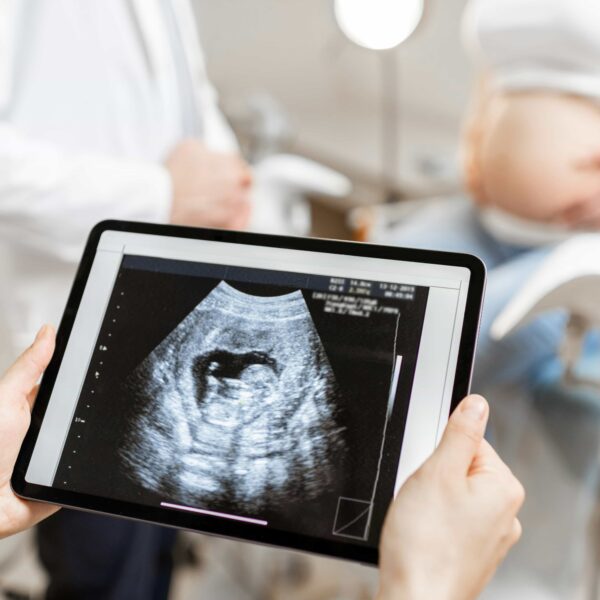
- Step 2: Ultrasound: A transvaginal ultrasound is the first-line imaging investigation. In some cases, a transabdominal ultrasound may be used instead. A specialist ultrasound may also be required. Importantly, a normal ultrasound does not rule out superficial peritoneal endometriosis.
- Step 3: MRI: A pelvic MRI may be arranged if ultrasound is not appropriate or if deep endometriosis is suspected based on your symptoms or examination findings.
- Step 4: Laparoscopy: If symptoms persist after a trial of medical treatment – even with normal imaging – a laparoscopy (keyhole surgery) may be recommended. This is currently the only definitive method for diagnosing endometriosis and can also allow treatment of lesions at the same time.
Treatment and diagnostic investigations can begin at the same time – you do not have to wait for a confirmed diagnosis to start managing symptoms.
Endometriosis treatment options
There is no single treatment that works for everyone. The right approach depends on your symptoms, their severity, your fertility goals, and how you respond to different therapies. Treatment decisions should always be made collaboratively with your doctor.
Pain relief
For mild-to-moderate pain, over-the-counter NSAIDs (such as ibuprofen) alone or in combination with paracetamol can be an effective first step. These work best when taken before pain becomes severe.
Hormonal therapy
Hormonal treatments work by reducing oestrogen levels, which slows the growth of endometrial tissue and reduces inflammation. They have the strongest evidence for managing pelvic pain, painful periods, and pain with sex.
First-line hormonal options include:
- Combined oral contraceptive pill
- Progestogen therapy – available as tablets, injection, IUD (Mirena), or implant
If the first option is not tolerated or is ineffective after three months, an alternative first-line treatment can be tried. Second-line options (such as GnRH agonists or antagonists) may be considered on specialist recommendation.
Note: Hormonal treatment is not recommended if you are actively trying to conceive.
Surgery
Surgery may be considered when hormonal treatments have not provided sufficient relief, or when the extent of endometriosis requires direct treatment.
Laparoscopic surgery: Keyhole surgery can be used to remove or ablate endometriosis lesions. If an endometrioma (ovarian cyst caused by endometriosis) is present, removal of the cyst is the preferred approach.
Hysterectomy: A hysterectomy is a major, irreversible procedure that permanently ends fertility. It is not always effective for endometriosis, as tissue can exist outside the uterus. If the ovaries are also removed, menopausal hormone therapy will likely be needed. This option is only considered after all other approaches have been explored.
Complementary and supportive therapies
There is no cure for endometriosis, so self-management strategies and supportive therapies play an important role alongside medical treatment.
- Pelvic physiotherapy: May help reduce pelvic pain and pain with sex. A referral to a pelvic floor physiotherapist is worth discussing with your doctor.
- Psychological support: Mindfulness-based therapy and counselling may offer modest improvements in pain and quality of life. Living with a chronic pain condition has significant emotional impact and support should be available.
- Acupuncture: May be associated with short-term improvements in endometriosis-associated pain.
- Lifestyle: Stress reduction, good sleep hygiene, and appropriate exercise may help manage symptom severity alongside medical treatment.
- Speak with a specialist
If you are experiencing symptoms associated with endometriosis, an accurate diagnosis is the first step. Dr Joseph Sgroi offers comprehensive assessment and management of endometriosis in Melbourne, with a holistic approach to your physical and emotional wellbeing.
Frequently asked questions | Endometriosis
How long does it take to get an endometriosis diagnosis?
On average, diagnosis is delayed by 6–10 years from the onset of symptoms. This is because symptoms often overlap with other conditions and endometriosis cannot be detected on a standard ultrasound in all cases. If you have persistent symptoms, it is important to keep advocating for further investigation.
Can endometriosis be seen on an ultrasound?
In some cases – particularly where endometriomas (ovarian cysts) or deep endometriosis are present – it can be detected on a specialist transvaginal ultrasound. However, superficial peritoneal endometriosis is often not visible on imaging. A normal ultrasound does not rule out the condition.
What is the difference between endometriosis and adenomyosis?
Endometriosis involves endometrial-like tissue growing outside the uterus. Adenomyosis is a related condition where this tissue grows within the muscular wall of the uterus. The two conditions can occur together and share many symptoms.
Will endometriosis come back after surgery?
Endometriosis can recur after surgery, particularly if hormonal treatment is not continued afterwards. There is no evidence to support routine repeated surgery for management of the condition. Ongoing hormonal management and regular reviews with your doctor are recommended.
What should I track before my appointment?
It helps to keep a symptom diary noting: when pain occurs and its severity, the pattern of your menstrual cycle, any symptoms related to bowel or bladder function, impact on daily activities or work, and any treatments you have already tried. This information helps your doctor assess your situation accurately.